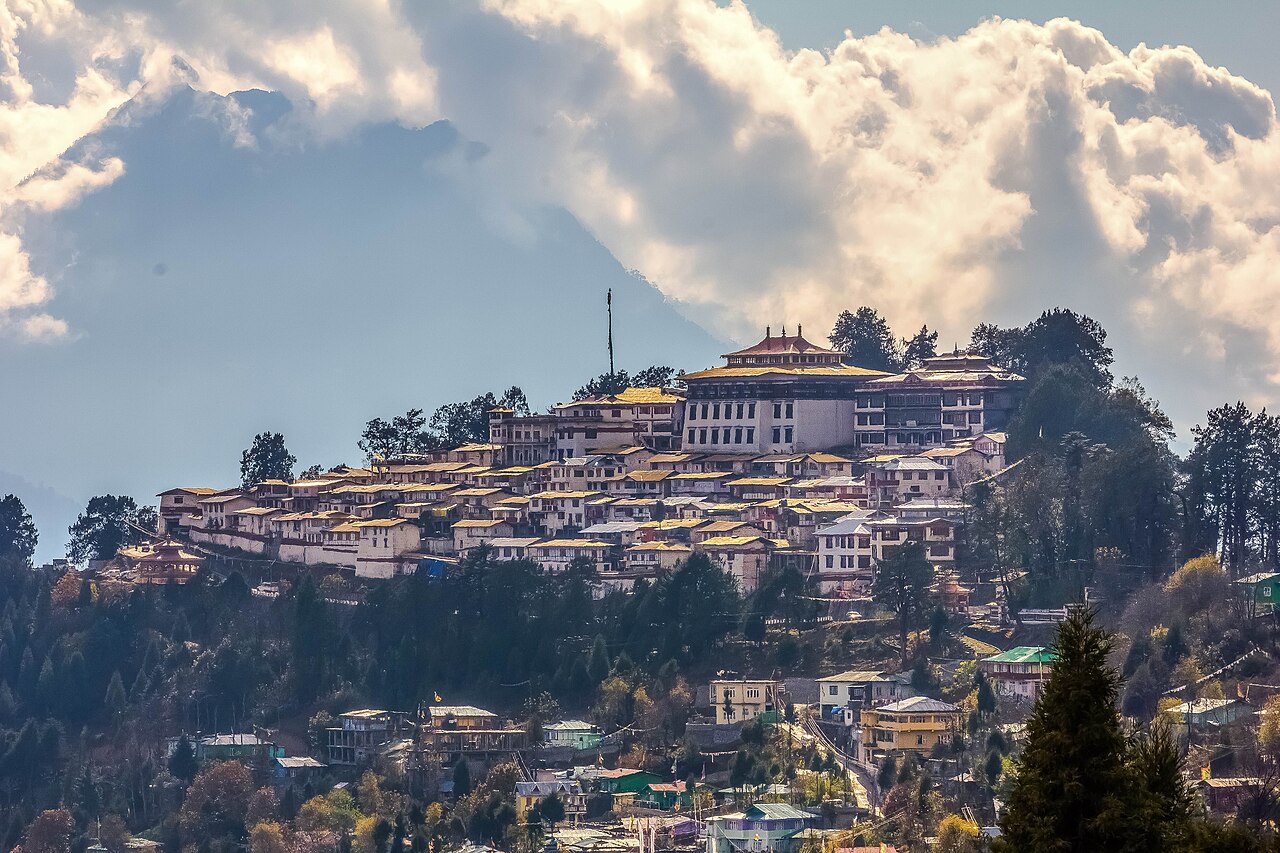
Arunachal Pradesh — The Land Where the Sun First Rises Over India
India's easternmost state greets the dawn before anywhere else on the subcontinent. Thick forests, dramatic Himalayan passes, ancient monasteries, and over 26 indigenous tribal communities make Arunachal Pradesh one of the most culturally rich and scenically breathtaking destinations in Asia.
Overview
Arunachal Pradesh — literally "the land of the dawn-lit mountains" — shares international borders with Bhutan, China, and Myanmar. More than 80 per cent of the state is cloaked in dense forests, and its rivers — the Siang (Brahmaputra), Kameng, Subansiri, and Lohit — carve through gorges of staggering depth. A Protected Area Permit (PAP) or Inner Line Permit (ILP) is required for all non-resident Indians and foreigners, and this natural barrier has kept the state remarkably pristine.
Top Places to Visit
- Tawang Monastery: Perched at 3,048 metres, this 17th-century monastery is the largest in India and second largest in Asia. Its gilded Buddha statue, thangka paintings, and sweeping mountain views make it a must-visit.
- Ziro Valley: A UNESCO World Heritage tentative-listed site, home to the Apatani tribe who are renowned for their sustainable rice-and-fish cultivation method. The annual Ziro Music Festival draws artists and audiences from across the world.
- Namdapha National Park: One of the largest protected areas in the Eastern Himalayas, harbouring all four big cats (tiger, leopard, clouded leopard, snow leopard) alongside red pandas and hoolock gibbons.
- Bomdila: A market town with apple orchards, a craft centre for Arunachali weaves, and panoramic views of the Eastern Himalayan ranges.
- Mechuka (Menchuka): A remote valley near the China border, accessible by flight or a long mountain drive, famous for its pristine Siyom River and the 400-year-old Samten Yongcha Monastery.
- Dirang: A compact valley town known for its 500-year-old dzong (fort), hot springs, and National Research Centre on Yak.
Culture and Heritage
Over 26 major tribal groups — Nyishi, Galo, Adi, Apatani, Monpa, Mishmi, and others — each have distinct languages, weaving traditions, and belief systems. The Monpa people of Tawang follow Tibetan Buddhism; most other tribes practise animist Donyi-Polo (sun-moon) religion. Festivals such as Losar, Ponung, and Ali Aye Lrigang mark agricultural and celestial cycles.
Cuisine
Rice is the staple, often fermented into Apong (rice beer) which is offered to guests as a gesture of hospitality. Smoked pork with bamboo shoot (a classic Arunachali combination), Thukpa (Tibetan noodle soup), and Pika Pila (dry chilli and fermented soybean chutney) are defining flavours of the region.
Best Time to Visit
October to April suits most parts of the state. Tawang is accessible even in winter but can get heavy snowfall from December to February. Avoid the June–September monsoon when roads are prone to landslides.
How to Reach
The nearest major airport is Guwahati (Assam). Itanagar has a small airport with limited connectivity. Tawang is reached by road from Guwahati — a 10–12 hour journey via Bhalukpong. The Arunachal Pradesh State Transport buses are reliable.
Travel Tips
- Obtain your ILP from the state government's online portal before travel — it is mandatory.
- Carry warm layers even in October; temperatures drop sharply at night.
- Photography near border areas is restricted — follow local guidance.
- Mobile connectivity is patchy; download offline maps before leaving towns.
Have a better photo of Arunachal Pradesh — The Land Where the Sun First Rises Over India?
Upload your own photograph. If we approve it, you earn between 1 and 10 paise. Every photo is checked by our team before it appears.
Share this
Comments
Stay in Arunachal Pradesh
We do not list a stay in Arunachal Pradesh yet. Tell us your dates and we will find you one.
Plan it for meNext in the journal
Arunachal Pradesh
Itanagar — Fort of Bricks at the Sunrise Frontier
Capitals · Named for the 14th-century Ita fort's brick ramparts, Itanagar is the young capital of India's most linguisti...
Arunachal Pradesh
The Living Culture of Arunachal Pradesh: Food, Dress, Weddings & People
Original K2K guide to Arunachal Pradesh — traditional food with a home recipe, historic and modern dress, wedding ritual...