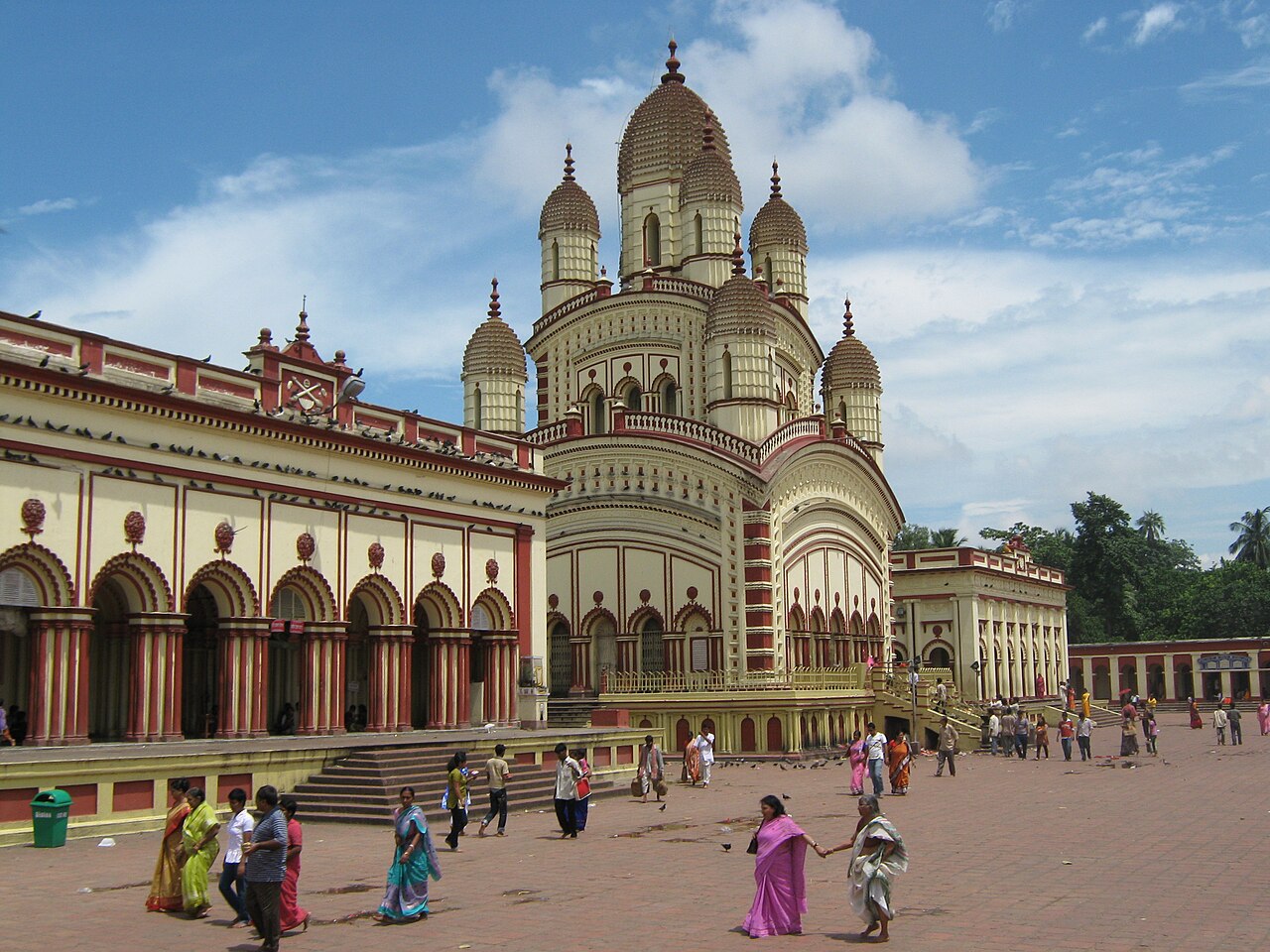
West Bengal — Kolkata's Grand Decay, Tea Gardens, and the Sundarban Tiger Swamp
West Bengal is the state of Rabindranath Tagore and Mother Teresa, of the Durga Puja pandals that transform Kolkata into the world's largest open-air art festival, of the world's largest mangrove delta where Bengal tigers swim between islands, and of the tea gardens of Darjeeling that produce the world's most aromatic first-flush teas.
Overview
West Bengal extends from the snow peaks of the Singalila Ridge on the Nepal border in the north to the tidal creeks of the Sundarban delta in the south — a distance of 600 km through one of the world's most densely populated river plains. The state is the fourth most populous in India (over 90 million people) and its capital Kolkata — the "City of Joy" — was the capital of British India until 1911. The cultural output of Bengal over the past three centuries — in literature, philosophy, music, painting, film, and political thought — is disproportionate to its size and is one of the great intellectual traditions in the history of Asia.
Top Places to Visit
- Kolkata: Victoria Memorial (the finest colonial building in Asia, a marble palace housing the best collection of East India Company-era art and artefacts), Howrah Bridge (one of the world's busiest cantilever bridges, crossed by 100,000 vehicles and 150,000 pedestrians daily), the Kalighat Temple (one of the most active Shakti Peethas in India), College Street (a kilometre of second-hand bookshops — the world's largest street book market), and the Sundari neighbourhoods of North Kolkata with their crumbling 19th-century mansions and thakurdalan (ancestral mansion courtyards).
- Darjeeling: At 2,045 metres in the Himalayan foothills, Darjeeling was the queen of British hill stations — its tea gardens produce the world's most prized first-flush (March–April) teas, its DHR (Darjeeling Himalayan Railway) is a UNESCO World Heritage narrow-gauge railway, and Tiger Hill at dawn offers views of Kangchenjunga (8,586 m) that make the 4 am wake-up entirely worthwhile.
- Sundarbans: The world's largest mangrove forest (10,000 sq km, shared with Bangladesh) and a UNESCO World Heritage Site — the Bengal tiger population here has adapted to swimming between tidal islands and hunting fish and crabs, in addition to their usual prey. Boat safaris through the labyrinthine channels are the only way to explore this extraordinary wilderness.
- Shantiniketan: The open-air university founded by Rabindranath Tagore in 1901 — the red-laterite landscape, the ashram atmosphere, the Tagore museums, and the Poush Mela (December) fair that he established are a living memorial to India's most complete polymath.
- Bishnupur: A town famous for its 17th–18th century Malla dynasty terracotta temples — the Rasmancha, Jorbangla, and Shyamrai temples are extraordinary examples of fired-clay architecture. The Baluchari silk sarees woven here depict scenes from Hindu epics in their borders.
- Murshidabad: The former capital of the Nawabs of Bengal — the Hazarduari Palace (1,000-door palace), Katra Mosque, and the site of the Battle of Plassey (1757) tell the story of the last independent nawab of Bengal and the beginning of British territorial power in India.
Culture and Heritage
Durga Puja — the 10-day autumn festival honouring the goddess Durga — transforms Kolkata into perhaps the world's greatest periodic public art event. Hundreds of pandals (elaborate temporary structures) created by teams of sculptors and designers compete for awards — themes range from architectural recreations of global landmarks to abstract artistic visions. The entire city dresses up, visits pandals through the night, and feasts collectively. Rabindra Sangeet (the songs of Tagore — over 2,000 composed by one man) remains the emotional soundtrack of Bengali life.
Cuisine
Bengali cuisine is perhaps the most complex regional cooking tradition in India. The rule of six tastes (sweet, sour, bitter, pungent, salty, and astringent) applied in a single meal is unique to Bengal. Maach Bhaat (fish and rice — the inseparable pair that defines Bengali food identity), Shorshe Ilish (Hilsa fish in a mustard-poppy paste — the great Bengali delicacy), Mishti Doi (sweetened hung yogurt in earthen pots), Rasgolla (Bengal's most beloved sweet, now with a GI tag), and Kathi Rolls (Kolkata's great street food — grilled meat wrapped in a paratha with egg) span a culinary universe in one city.
Best Time to Visit
October to March. Durga Puja (September/October) is the absolute highlight — plan accommodation 6+ months in advance. Darjeeling is beautiful in spring (March–April, first-flush tea season) and autumn (October–November).
How to Reach
Netaji Subhas Chandra Bose International Airport, Kolkata is a major international hub. The Darjeeling Himalayan Railway connects New Jalpaiguri (well served by mainline trains) to Darjeeling. NH 12 and NH 27 are the main road arteries.
Travel Tips
- Kolkata Metro is fast and inexpensive — use it to navigate the city's vast distances.
- For Sundarbans, book a government-approved operator — private boats in the core tiger area require permits.
- Darjeeling's first-flush teas (March–April) are the most sought-after — buy directly from estate shops for authenticity.
- The pandal-hopping during Durga Puja is best done between midnight and dawn when crowds thin.
Have a better photo of West Bengal — Kolkata's Grand Decay, Tea Gardens, and the Sundarban Tiger Swamp?
Upload your own photograph. If we approve it, you earn between 1 and 10 paise. Every photo is checked by our team before it appears.
Share this
Comments
Stay in West Bengal
Next in the journal
West Bengal
Sundarbans — The Only Swimming Tigers on Earth
Wild India · The Ganga-Brahmaputra delta's mangrove labyrinth drowns and rises twice daily; its tigers swim between isla...
West Bengal
Kolkata — The City of Joy
Capitals · First capital of British India and forever capital of Indian letters — Tagore's city of addas, trams, Howrah...
West Bengal
Darjeeling — Toy Train to the Queen of Hills
Tourist Gems · British planters carved tea gardens into these ridges and laid a two-foot railway (1881) that still loops...